High on Life 2 Review: Bigger, Louder, Better?
Sequels are risky business. Go too safe and players call it lazy. Go too wild and you lose what made the original click. So the big question in this High on Life 2 Review: Bigger, Louder, Better? is simple — does Squanch Games level up, or just turn the volume up?
Short answer? It absolutely turns the volume up.
Long answer? Let’s get into it.
High on Life 2 Review: What’s Changed This Time?
At its core, High on Life 2 sticks to what made the first game stand out. You’re still blasting bizarre alien enemies. Your guns still talk. And yes, they still talk a lot.
However, this sequel feels far more intentional.
The worlds are larger. Combat feels weightier. Missions have more structure. Instead of feeling like a chaotic collection of jokes and firefights, everything now flows with purpose.
That matters.
From the opening hours, it’s clear the developers listened. Movement feels smoother. Encounters escalate more naturally. Meanwhile, exploration feels less like filler and more like discovery.
It’s still absurd. Just more refined.
A Universe That Feels Alive
Scale is one of the biggest upgrades.
Planets no longer feel like quirky backdrops. They feel inhabited. Alien cities buzz with chatter. Strange wildlife roams organically. Background details reward players who slow down and look around.
Verticality plays a bigger role too.
You’re not just sprinting through corridors. Instead, you’re grappling, climbing, and weaving through layered environments. Combat arenas now encourage motion rather than static positioning.
Consequently, fights feel dynamic.
You’re constantly shifting angles. Dodging incoming fire. Using terrain to your advantage.
And it keeps things fresh.
Combat: Controlled Chaos
Let’s talk firepower.
In this High on Life 2 Review: Bigger, Louder, Better?, combat is where the sequel truly shines. Gunplay feels tighter. Impact feels stronger. Enemies respond more convincingly to your attacks.
Weapon upgrades aren’t just cosmetic tweaks either. They noticeably change how you approach encounters.
Some guns excel at crowd control. Others demand precision. Swapping between them mid-fight feels fluid and satisfying.
Importantly, enemy variety has improved.
You can’t just spam your favourite weapon and breeze through. Different enemy types force adaptation. Boss battles, in particular, demand attention and strategy.
Short fights. Sharp mechanics. Clear escalation.
It works.
The Humour: Still Relentless
Now we address the obvious.
High on Life 2 remains unapologetically loud. Characters interrupt you. Guns argue mid-combat. Random NPCs overshare wildly unnecessary information.
Some jokes land brilliantly.
Others stretch thin.
Yet that unpredictability defines the experience. The game thrives on absurd timing and unexpected punchlines. It’s messy. It’s chaotic. And it’s entirely deliberate.
That said, there’s more balance this time.
Quieter moments exist. Emotional beats sneak in. Satirical commentary feels sharper rather than scattershot.
The writing shows growth without losing its weird identity.
Pacing: Tighter and Smarter
One criticism of the original was repetition. Certain sections dragged. Dialogue loops could overwhelm.
This sequel trims the fat.
Objectives are clearer. Side missions feel purposeful. Story progression moves at a stronger pace.
You’re rarely stuck waiting for something funny to happen.
Instead, the action pushes forward naturally.
Even when the jokes fly rapidly, momentum never stalls. That’s a major improvement.
Visuals and Performance
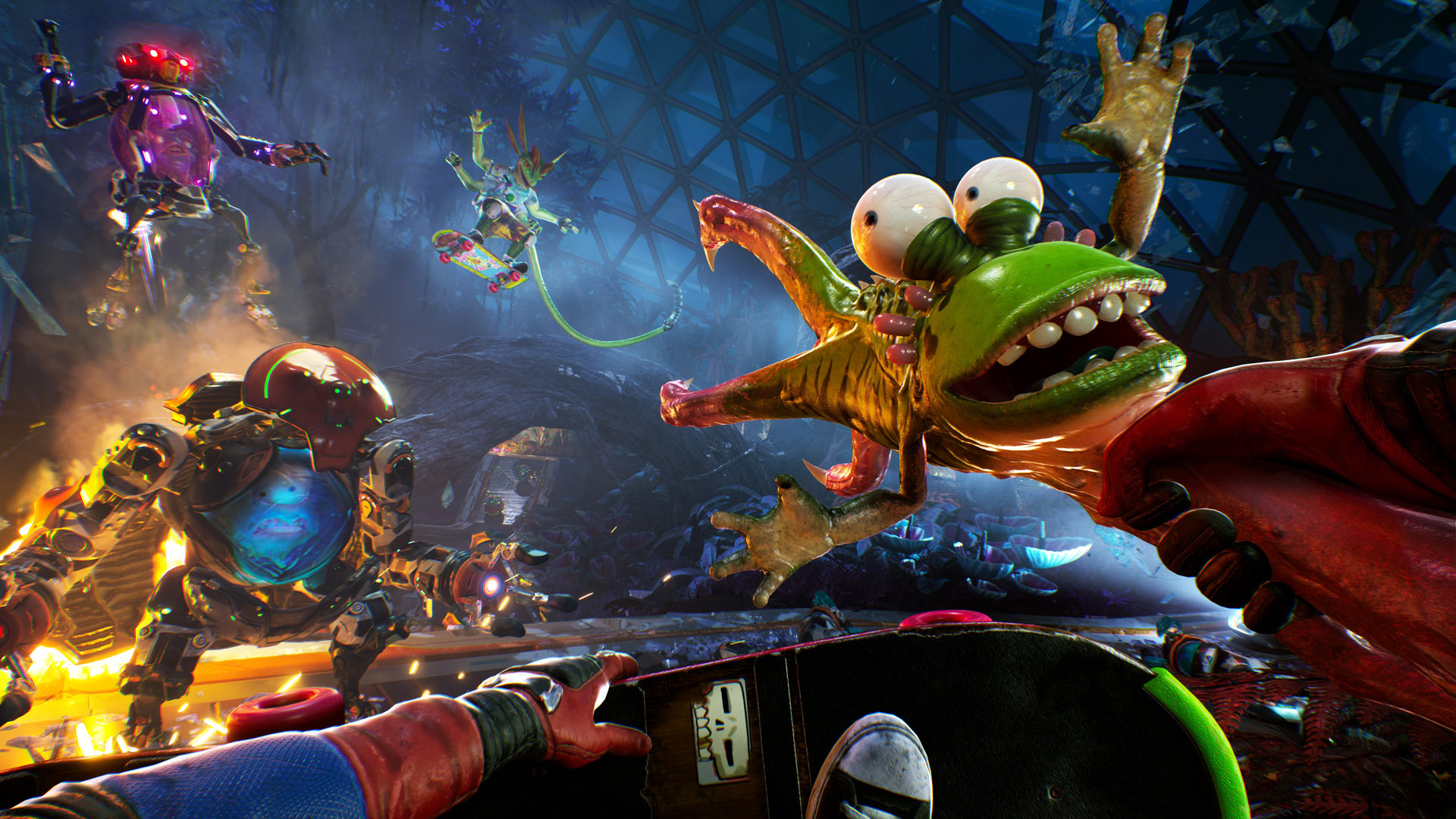
Visually, the sequel takes a noticeable step forward.
Alien landscapes are more detailed. Lighting feels more atmospheric. Colour palettes shift dramatically between locations, giving each planet its own personality.
Some areas glow with neon chaos. Others lean into darker, industrial tones.
Importantly, performance remains stable.
Frame rates hold during intense firefights. Animations feel smoother. Transitions between areas feel seamless.
It may look chaotic. But technically, it’s polished.
Boss Battles That Demand Focus
Boss encounters deserve real credit here.
Each major fight feels distinct. Patterns evolve mid-battle. Environmental hazards come into play. Timing matters.
You can’t simply unload ammo and hope for victory.
Instead, you learn patterns. You adapt. You move constantly.
Meanwhile, humour doesn’t vanish during these fights. It’s woven directly into the tension.
That balance keeps encounters memorable.
Storytelling With More Direction
Narrative depth wasn’t the first game’s strongest trait. It relied heavily on absurdity and shock value.
This time, structure feels stronger.
Character motivations are clearer. Progression feels purposeful. There’s actual momentum behind the chaos.
While it won’t rival story-driven RPGs, it does enough to keep you invested.
And sometimes, that’s all you need.
Sound Design and Voice Work
Voice performances remain a highlight.
Characters feel distinct. Delivery feels energetic. Even minor interactions carry personality.
Weapons sound punchy. Alien creatures feel unsettling. Environmental ambience adds texture to exploration.
It’s loud. It’s busy.
But it’s intentionally crafted noise.
Should You Play High on Life 2?
Fans of the first game’s wild tone will feel right at home. Meanwhile, anyone craving polished FPS mechanics with personality will find plenty to love here. However, players searching for deep emotional storytelling may want to look elsewhere.
For those exhausted by safe sequels and predictable shooters, though, this one genuinely stands out.
Strange in all the right ways, the experience constantly surprises. Chaotic energy fuels nearly every encounter. Bold design choices ensure it never fades into the background.
And sometimes, that’s exactly what gaming needs.
Final Thoughts
In this High on Life 2 Review: Bigger, Louder, Better?, one thing is clear — Squanch Games didn’t play it safe.
Instead of playing it safe, the team doubled down. Next, the universe was expanded with bigger, bolder environments. Meanwhile, combat was refined to feel tighter and more impactful. Finally, pacing was sharpened to keep the momentum relentless from start to finish.
Most importantly, they kept the identity intact. In a crowded FPS market, that confidence matters.
Whether you love it or hate it, you won’t forget it.