Silent Hill: Townfall Review: Terror Comes to Scotlan
The Silent Hill series has found new life in recent years, and Silent Hill: Townfall continues that revival by taking another significant creative risk. Rather than simply recreating the formula that established the franchise, developer Screen Burn shifts the horror to a remote Scottish setting, moves into first-person and places a greater emphasis on stealth.
The result is a Silent Hill experience that feels noticeably different without abandoning the psychological horror that defines the series.
Set in 1996, Silent Hill: Townfall follows Simon Ordell as he arrives in the isolated coastal community of St. Amelia. Something is clearly wrong. The streets are swallowed by fog, disturbing creatures roam the town and Simon’s own connection to the location becomes increasingly important.
It is familiar Silent Hill territory, but Screen Burn gives it a distinctly British identity.
St. Amelia Is the Star of Silent Hill: Townfall
Perhaps the strongest part of this Silent Hill: Townfall review is the setting itself.
St. Amelia feels like a believable Scottish coastal community rather than a generic horror location. Streets, buildings, signage and dated technology all reinforce the game’s 1990s setting. The attention to detail makes exploring the town fascinating even before its supernatural elements begin taking over.
Fog remains crucial, naturally. However, the Scottish coastline provides a different flavour of isolation from the American environments traditionally associated with Silent Hill.
Screen Burn also uses the community itself to strengthen the story. This isn’t simply a backdrop filled with monsters. St. Amelia has a history, and discovering what happened to its residents gradually becomes central to the experience.
First-Person Horror Changes the Formula
One of Townfall’s biggest changes is its first-person perspective.
The narrower viewpoint immediately makes Simon feel more vulnerable. You cannot easily see what is happening behind you, while tight interiors become increasingly uncomfortable once creatures begin appearing.
Combat exists, but Townfall isn’t interested in turning Simon into an action hero.
Melee weapons can help when necessary, while additional options eventually become available. However, direct confrontation remains dangerous. Avoiding enemies is frequently the smarter move.
Consequently, stealth becomes a major part of the experience. Players creep through environments, monitor enemy movements and decide whether to hide, escape or risk fighting.
This creates some genuinely intense encounters. However, maintaining such relentless pressure can also become exhausting across the wider campaign. Horror works best when tension has room to rise and fall, and Townfall occasionally keeps the dial turned up for too long.
The CRTV Is a Brilliant Addition
Townfall’s standout gameplay idea is Simon’s portable CRTV.
Think of it as an evolution of Silent Hill’s iconic radio. Instead of simply alerting players that something dangerous is nearby, the CRTV can be tuned to different signals and used to track creatures.
Importantly, it doesn’t remove the fear.
Players still need to interpret what they are seeing while remaining aware of their immediate surroundings. When several enemies are nearby, managing different signals becomes another source of tension rather than an easy escape route.
The CRTV is also incorporated into puzzles and storytelling. That makes it feel like an essential part of Townfall’s identity rather than a gimmick added purely for gameplay variety.
Puzzles Keep Silent Hill’s DNA Intact
Away from its stealth systems, Townfall remains heavily focused on exploration and puzzle-solving.
Old computers, floppy disks, telephones and other period technology are incorporated naturally into the world. Players must investigate their surroundings and pay attention to documents instead of simply following objective markers.
Some puzzles demand serious concentration.
That approach suits Silent Hill perfectly, although certain solutions can become frustratingly obscure. Still, the best puzzles make St. Amelia feel like a physical place players are investigating rather than another collection of locked doors.
A Different Kind of Silent Hill Story
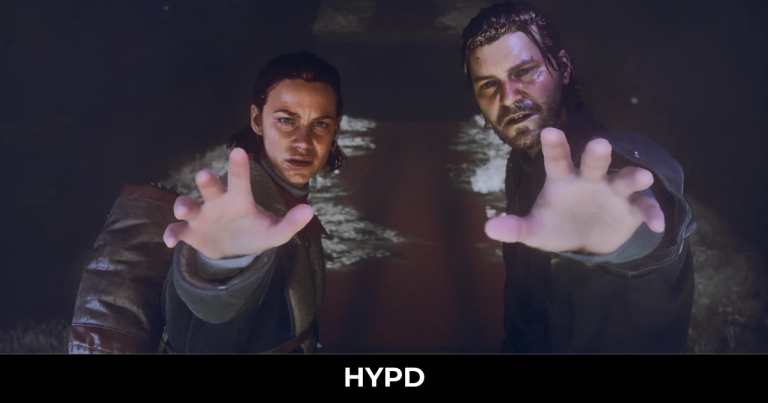
Townfall also expands beyond Simon’s perspective, allowing other characters to contribute directly to the wider mystery.
This gives Screen Burn room to explore St. Amelia from different viewpoints while gradually connecting individual experiences to the tragedy surrounding the community.
More importantly, the story isn’t solely interested in monsters.
Themes of guilt, responsibility, suffering and social pressure sit beneath the supernatural horror. That grounding helps Townfall maintain the psychological edge expected from Silent Hill while exploring ideas specific to its new setting.
HYPD Verdict
Silent Hill: Townfall proves the franchise doesn’t need to keep repeating its past to retain its identity.
Screen Burn delivers a striking Scottish setting, an effective move into first-person and a clever new mechanic through the CRTV. Stealth can occasionally become draining, while some puzzles risk slowing the momentum. However, the atmosphere rarely loses its grip.
Townfall understands what makes Silent Hill unsettling while being confident enough to reshape those ideas. Its Scottish setting gives the series a fresh identity, while the psychological horror remains unmistakably Silent Hill.
For a franchise once left sitting in the fog, its latest revival continues to push into interesting new territory.
HYPD Score: 8/10
Pros
- Atmospheric Scottish setting
- CRTV mechanic adds a fresh twist
- Strong psychological horror
- First-person perspective increases tension
- Detailed environments reward exploration
Cons
- Stealth can become exhausting
- Some puzzles may feel overly obscure
- Relentless tension occasionally affects the pacing