
Hollow Knight Silksong the Review
The wait is finally over. After years of anticipation, speculation, and endless wishlists, Hollow Knight: Silksong has finally launched—and it does not disappoint. Fans of the original indie masterpiece from Team Cherry have been craving this follow-up since its announcement, and now we can finally dive into the rich, mysterious world of Pharloom.
This blog takes a deep look at everything Hollow Knight Silksong brings to the table, from gameplay mechanics and story beats to design choices and overall performance. Strap in—this is Hollow Knight Silksong the review you’ve been waiting for.
A New Protagonist: Hornet Takes Centre Stage

One of the boldest changes in Silksong is the protagonist swap. Instead of controlling the silent Knight, players step into the agile shoes of Hornet, the fierce protector introduced in the first game. This change reshapes the flow of combat and exploration entirely.
Hornet is faster, more acrobatic, and deadlier in motion. Her extended reach with needle and thread adds fluidity to encounters, allowing you to dart across the screen with precision. While Hollow Knight’s combat demanded patience, Silksong rewards aggression and movement.
This shift isn’t just cosmetic—it transforms the rhythm of the entire game. The review wouldn’t be complete without highlighting how refreshing it feels to embody Hornet’s unique style.
Gameplay: Familiar Yet Fresh
At its core, Silksong retains everything that made Hollow Knight iconic: challenging combat, labyrinthine environments, and a sense of mystery lurking behind every corner. However, Team Cherry has layered on significant changes.
Needle and Thread Mechanics
Hornet’s weapon offers more than damage. The thread mechanic enables grappling across chasms, pulling enemies close, and chaining attacks with flair. It gives combat encounters depth while enhancing traversal.
Healing Overhaul
Gone are the slow soul-charging heals of the original. Hornet heals faster, but with limited charges, forcing tactical decision-making. This system encourages players to balance aggression with careful timing.
Quest System
Silksong introduces structured quests, a notable departure from Hollow Knight’s purely exploratory design. NPCs now offer clear tasks and rewards, bringing more purpose to revisits and encouraging deeper world engagement.
The result? A game that feels both comfortably familiar and boldly experimental.
The World of Pharloom
The setting of Silksong is nothing short of breathtaking. Pharloom stands apart from Hallownest, offering brighter tones and a hauntingly beautiful aesthetic.
Every region bursts with life, from mossy forests to golden citadels shimmering with light. Unlike the decay of Hollow Knight’s world, Pharloom feels alive, yet no less dangerous.
The verticality of the map is another standout. While Hallownest sprawled outward, Pharloom stretches upward, creating a different sense of scale. Ascending through towers and cliffs makes exploration feel more ambitious.
Enemies and Boss Fights
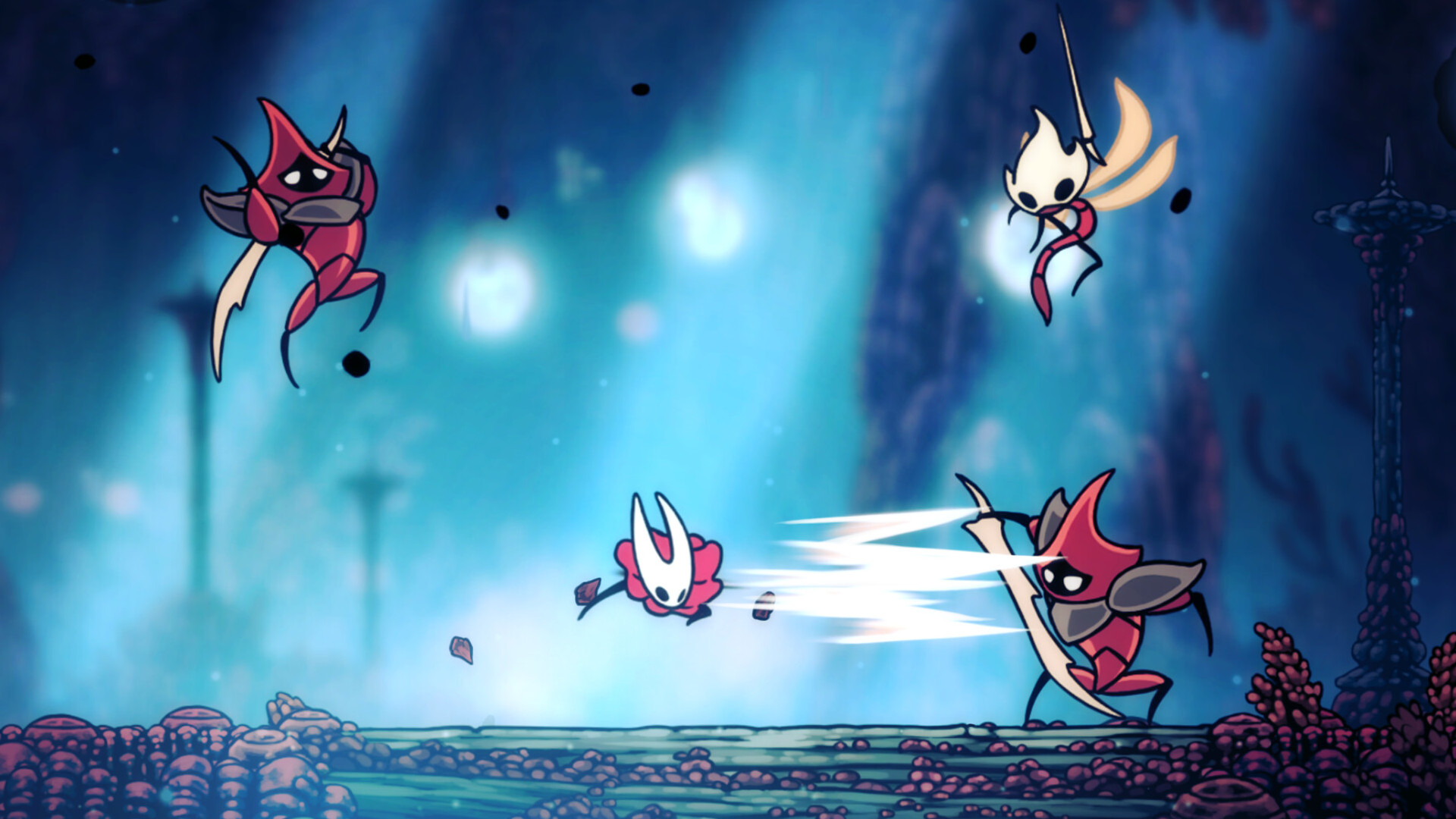
No Hollow Knight review would be complete without mentioning the enemies. Team Cherry has outdone themselves again. Pharloom’s creatures are both bizarre and terrifying, blending elegance with menace.
Boss fights are highlights. Each one feels handcrafted, with mechanics that test skill, adaptability, and nerves of steel. Some battles echo the difficulty of the first game’s pantheon fights, while others innovate in surprising ways.
Hornet’s speed makes encounters feel more dynamic than ever. Dodging, weaving, and countering are second nature, making every victory satisfying.
The Music and Atmosphere
Christopher Larkin’s soundtrack once again steals the show. The music in Silksong elevates every moment, from quiet exploration to intense boss fights.
Haunting violins, sweeping strings, and subtle ambient tones create a world that feels alive. The score adapts seamlessly, guiding emotion without ever overwhelming the action.
Combined with the art direction, the atmosphere in Silksong is second to none. This is indie gaming at its absolute finest.
Difficulty and Accessibility
The original Hollow Knight was notorious for its punishing difficulty, and Silksong carries that legacy proudly. However, it feels slightly more approachable thanks to Hornet’s agility and healing system.
While hardcore fans will find plenty of brutal challenges, new players may find the pacing more forgiving. Team Cherry has struck a near-perfect balance between accessibility and intensity.
Performance and Technical Polish
On PC, Silksong runs beautifully. The frame rate remains solid even during chaotic battles, and the hand-drawn visuals shine in crisp detail. On consoles, the performance holds steady, though handheld Switch players may encounter minor dips.
Load times are snappy, menus are intuitive, and bugs are rare. For a game of this scale, it feels impressively polished.
Replayability
Like its predecessor, Silksong offers staggering replay value. Hidden areas, secret bosses, and multiple questlines ensure that every playthrough feels unique.
Completionists will find themselves pouring dozens, if not hundreds, of hours into Pharloom’s depths. Speedrunners, too, will relish the mechanics that make precise movement a joy.
The Verdict: Is Hollow Knight Silksong Worth the Hype?
So, here’s the big question: does Hollow Knight Silksong live up to its hype? The answer is a resounding yes.
Team Cherry has delivered a sequel that honours the original while carving out its own identity. The changes to combat, healing, and structure ensure the experience feels fresh, while the world-building and atmosphere remain unmatched.
For fans of the original, Silksong is an essential continuation of the journey. For newcomers, it is a brilliant entry point into one of gaming’s most enchanting universes.