
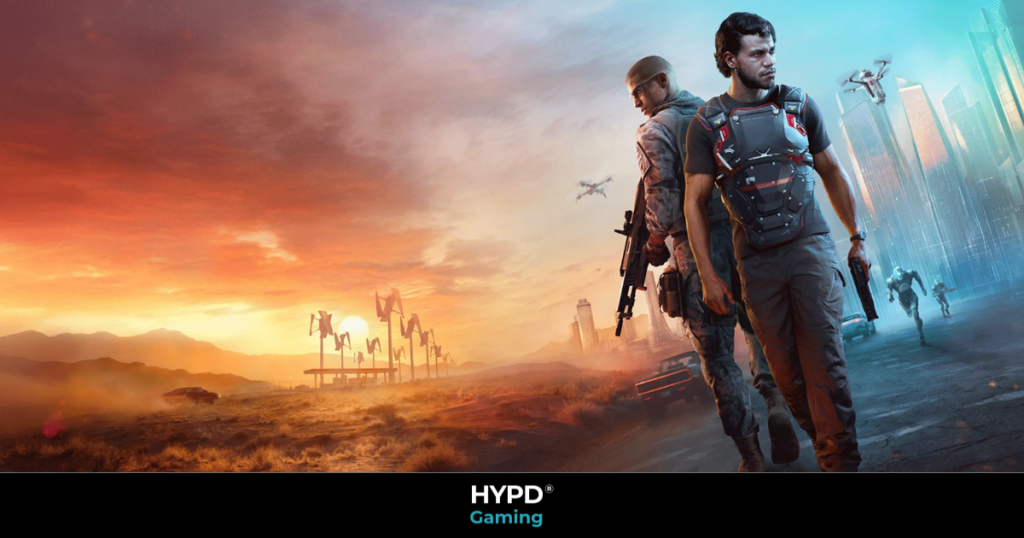
MindsEye: The Review – A Wild Ride Through Reality
The gaming world has been buzzing with anticipation, and now it’s finally here—MindsEye, the long-awaited, narrative-driven action-adventure from Build A Rocket Boy. MindsEye: The Review explores how this title doesn’t just challenge how we play—it flips the entire concept of storytelling on its head.
This review dives deep into what makes MindsEye one of the most experimental and visually gripping titles of 2025. From gameplay mechanics to story complexity, we break it all down—no spoilers, just raw impressions. So, buckle up!
What Is MindsEye?
If you’re scratching your head wondering what MindsEye actually is, you’re not alone. Initially teased as part of the broader Everywhere universe, this standalone action-adventure has quickly taken on a life of its own. It blends cinematic storytelling, high-octane combat, and multi-dimensional realities—all served up with a twist of psychological thriller.
The game puts players in the shoes of Jack Preston, a man plagued by haunting visions and trapped in a fractured version of reality. You’ll explore dreamscapes, memory fragments, and glitch-ridden cities—all while trying to separate illusion from truth.
Visually Stunning, Unapologetically Surreal
From the moment you boot up MindsEye, it’s clear this is no cookie-cutter action game. The environments are breath-taking—vivid lighting, shifting architecture, and a haunting colour palette that transforms as your perception of reality shifts.
Think Control meets Inception, with a dose of Cyberpunk 2077’s polish. The graphical fidelity is top-tier, especially on next-gen consoles and high-spec PCs. But it’s not just about good looks—every visual decision supports the game’s central theme: What if everything you see is a lie?
Narrative Depth That Leaves You Questioning Everything
Story is MindsEye’s beating heart. Jack’s internal battle is gripping, unpredictable, and filled with twists that keep players guessing until the final scene.
This isn’t just a linear tale. The narrative adapts based on player choice, emotional responses, and even how quickly you solve certain puzzles. Multiple endings make replaying a must, especially if you want to uncover the game’s hidden truths.
What really sets the game apart is its use of environmental storytelling. Every corridor, radio broadcast, and glitchy hallucination contributes to the overarching mystery. It’s smart, subtle, and refreshingly mature.
Gameplay Mechanics: Familiar Foundations, Bold Execution
At its core, MindsEye blends third-person combat, stealth, and light puzzle-solving. While the mechanics might seem familiar—cover-based shooting, environmental interaction, resource management—it’s the execution that’s truly next level.
Combat is slick and responsive. You’ll switch between reality layers in real time, revealing hidden enemies or alternative paths. Certain weapons only work in certain dimensions, adding tactical depth to each encounter.
The puzzles are more than filler—they tie directly into Jack’s psyche. Solving them isn’t just about progress; it’s about understanding Jack’s trauma and unlocking his suppressed memories.
Sound Design and Voice Acting: Top-Tier Immersion
You can’t talk about MindsEye without giving major props to its soundscape. The score oscillates between cinematic orchestras and distorted electronic pulses, shifting in tone as the world around you morphs.
Voice acting is equally impressive. Jack’s internal monologues are haunting, raw, and often delivered mid-gameplay, adding urgency to the experience. Side characters are just as well-crafted, each with distinctive personalities and layered dialogue that avoids cliché.
This is the kind of game where wearing headphones genuinely enhances the experience. Every footstep, every whisper in the dark—it’s all designed to keep you on edge.
MindsEye and the Everywhere Ecosystem
One of the most unique aspects of MindsEye is that it exists within the Everywhere platform. While it’s a standalone narrative, MindsEye is also a showcase of what Build A Rocket Boy’s new universe is capable of.
Players can expect cross-platform interactions in future content, where your MindsEye choices may echo through user-created Everywhere worlds. It’s an ambitious plan, and MindsEye sets a strong foundation for what’s to come.
Bugs, Glitches, and the Not-So-Great Bits
No game is perfect, and MindsEye isn’t immune to launch-day hiccups. Some players have reported minor performance issues, particularly during heavy particle sequences or when switching dimensions quickly. However, patches are already rolling out, and most bugs are more cosmetic than game-breaking.
A few sections also suffer from pacing issues, especially in the second act. While the first and final chapters are masterful, the middle portion drags slightly with prolonged stealth sequences that feel at odds with the narrative urgency.
Replayability and Post-Launch Support
Replay value is baked into MindsEye’s DNA. With branching paths, multiple endings, and hidden layers to explore, one playthrough barely scratches the surface. Developers have confirmed new episodic content is in the works, expanding Jack’s journey and introducing new playable characters.
What’s more, the modding potential through Everywhere could give MindsEye a long shelf life. We could see user-generated missions or even spin-off worlds crafted by the community in the near future.
Final Verdict: A Must-Play for Fans of Narrative Gaming
MindsEye: The Review wouldn’t be complete without this — a clear verdict: this game is a wild, unforgettable ride. It’s not perfect, but its ambition, storytelling depth, and reality-shifting mechanics easily make it one of 2025’s most daring releases.
If you’re into cerebral narratives, unpredictable twists, and gameplay that keeps you on your toes, MindsEye is calling your name. It’s bold. It’s bizarre. And honestly? It’s brilliant.
Ready to question everything you thought you knew about video game storytelling? MindsEye is the next level. Don’t sleep on it.


